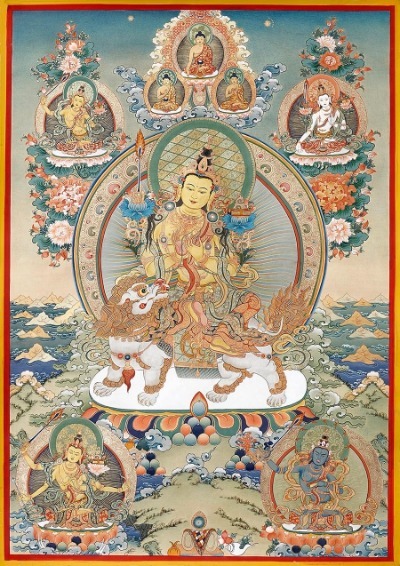
Regong Arts
Introduction
Regong Arts, a significant cultural expression originating from the Tibetan and Tu ethnic groups, thrive in the Longwu River basin in Qinghai province, Northwest China. Known for their vibrant depictions of Buddhist subjects, Regong Arts encompass a range of artistic endeavors including thangka paintings, murals, sculptures and barbola. These arts are renowned for their distinct Tibetan Buddhist style and unique regional characteristics, reflecting the spiritual and cultural heritage of the region. The Regong Arts are not only a vital part of the local artistic life but also extend their influence to nearby provinces and beyond, reaching South-East Asian countries. In 2009, Regong Arts were inscribed on the UNESCO Representative List of the Intangible Cultural Heritage of Humanity, recognizing their cultural significance and the need for preservation.
History
The origins of Regong Arts can be traced back to the 10th century, where they began to flourish along the Longwu River basin. This artistic tradition was born out of the region's rich cultural tapestry, imbued with Buddhist influences that shaped its development. Over centuries, Regong Arts evolved into a collective of artistic practices including painting, sculpture and textile works.
The term "Regong" in Tibetan translates to "a golden valley where dreams are fulfilled", symbolizing both the physical beauty of the region and the rich cultural heritage it represents. The arts have been meticulously preserved and passed down through generations, often from fathers to their children or from masters to apprentices. This tradition of tutelage ensures that the ancient techniques continue to thrive, maintaining the intricate line drawings, precise color matching, and detailed pattern designs that characterize Regong Arts.
Characteristics
Regong Arts are distinguished by their vibrant colors, intricate designs and profound spiritual themes. They are deeply rooted in Tibetan Buddhist iconography, often depicting deities, mandalas and scenes from Buddhist teachings. The use of minerals and organic pigments derived from precious stones such as coral, agate and gold ensures that the vibrant colors of thangka paintings and murals are preserved for centuries.
These arts are also characterized by their versatility and adaptability, evident in the variety of art forms they encompass. From the detailed religious scrolls of thangka paintings to the soft relief art of barbola and the diverse materials used in sculptures, Regong Arts demonstrate a broad artistic range.
Types
Thangka
Thangka paintings are a cornerstone of Regong Arts, embodying the spiritual and artistic traditions of Tibetan Buddhism. These religious scrolls are crafted on cotton or silk using mineral and organic pigments, which lend them their enduring vibrancy. Thangka paintings typically depict Buddhist deities, mandalas or scenes from Tibetan Buddhist teachings, serving both as objects of veneration and as educational tools in monasteries. The creation of thangka is a meticulous process involving sketching patterns in charcoal, applying layers of natural dye, and incorporating intricate details to bring the imagery to life.
Sculptures
Regong sculptures are another vital aspect of this artistic tradition, utilizing materials such as wood, clay, stone and brick. These sculptures can be found adorning temples and homes, where they decorate rafters, wall panels, tea tables and cabinets. The sculptures often portray religious figures, capturing the essence of Tibetan Buddhist teachings through their detailed and expressive forms.
Murals
Murals in the Regong Arts tradition are large-scale paintings that grace the walls of monasteries and other religious spaces. These vibrant artworks often feature complex compositions that depict various aspects of Buddhist cosmology, historical events and religious narratives. The murals are characterized by their use of bold colors, intricate patterns and the skillful depiction of figures.
Techniques
The techniques employed in Regong Arts are deeply rooted in ancient traditions, passed down through generations of artists. The creation of thangka paintings, for instance, requires a thorough understanding of Buddhist iconography and symbolism. Artists must adhere to strict guidelines for drawing figures, matching colors and designing patterns as prescribed in ancient texts. This meticulous process involves preparing the canvas, sketching the initial design with charcoal, and layering natural dyes to achieve the desired vibrancy and detail.
Similarly, the techniques for creating sculptures and murals involve a deep knowledge of materials and craftsmanship. Sculptors work with a variety of materials, each requiring specific skills and techniques to shape and detail the figures. Murals, on the other hand, demand a mastery of scale and composition, as well as the ability to work with natural pigments to achieve the rich colors characteristic of Regong Arts.
Recognition and Preservation
These arts have also become a source of cultural pride and economic opportunity for the region. With the rise in global appreciation and recognition, Regong Arts have attracted tourism and generated economic benefits for local communities. They have also played a role in cultural exchanges, allowing for the sharing and appreciation of Tibetan culture on a global scale.
In more recent history, the region has seen a surge in interest and preservation efforts. With the establishment of art academies and cultural centers, more people are engaging in the practice and study of these arts, contributing to their revitalization and global appreciation.








